

Recently, the CNYRIC hosted a training that was a little outside of its normal purview, and was one of the rare instances of an event that wasn't outwardly-focused on school district personnel or business offices.
The topic was broached when members of the (building-level) CNYRIC Wellness Committee specifically requested CPR/AED training. It was determined that this was an endeavor worth investing in given widespread buy-in from the committee members as a whole. When feelers were put out to gauge that interest, the committee hit the minimum number of people that would be required almost immediately. And so, the American Red Cross agreed to visit the CNYRIC campus to conduct CPR & AED training (which stand for “cardiopulmonary resuscitation” and “automated external defibrillator,” respectively).
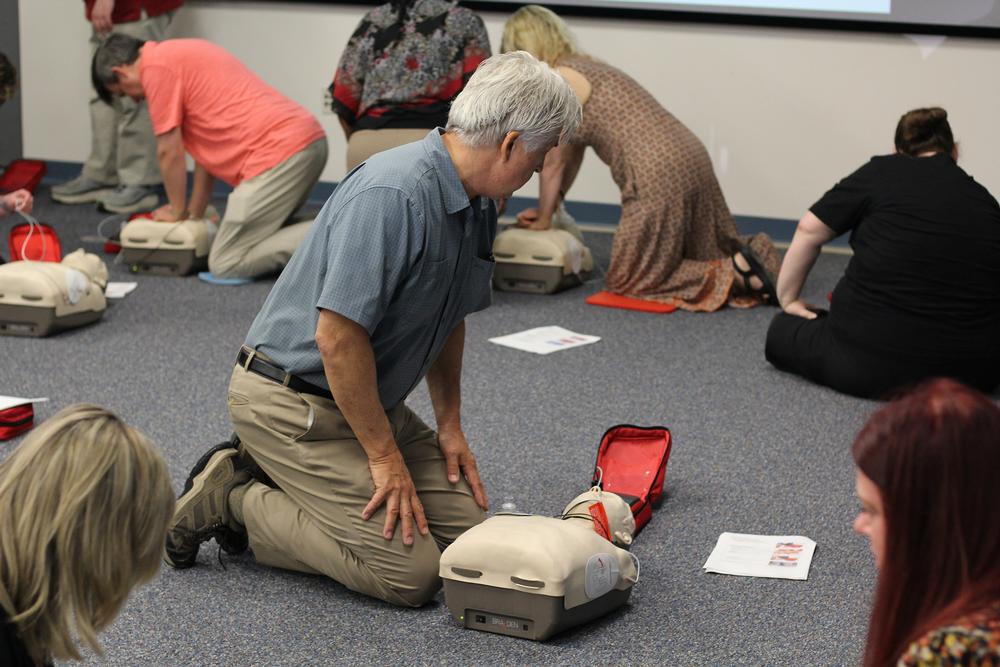
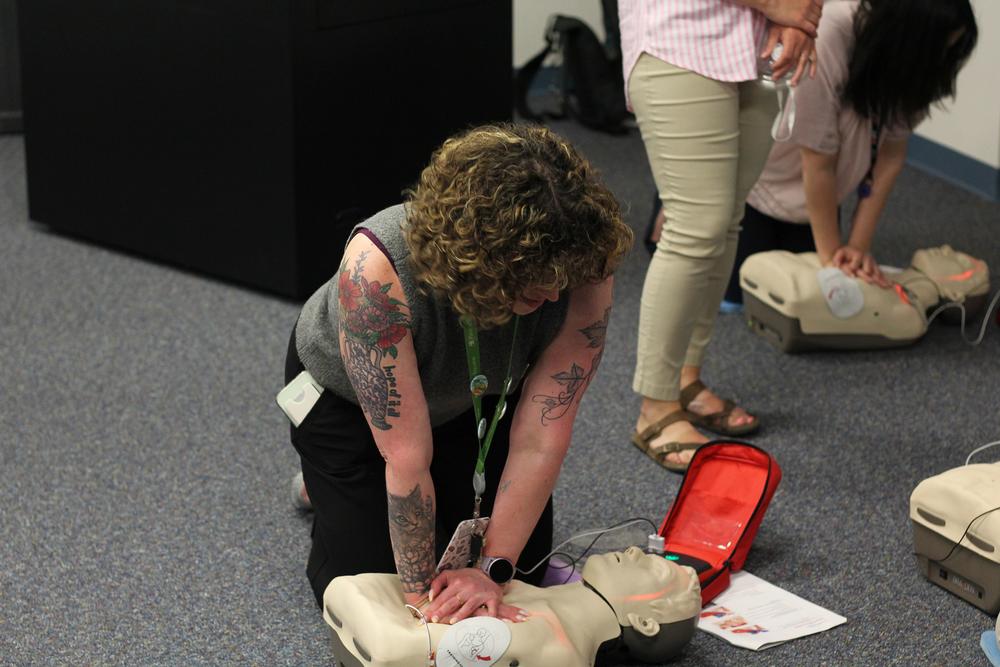
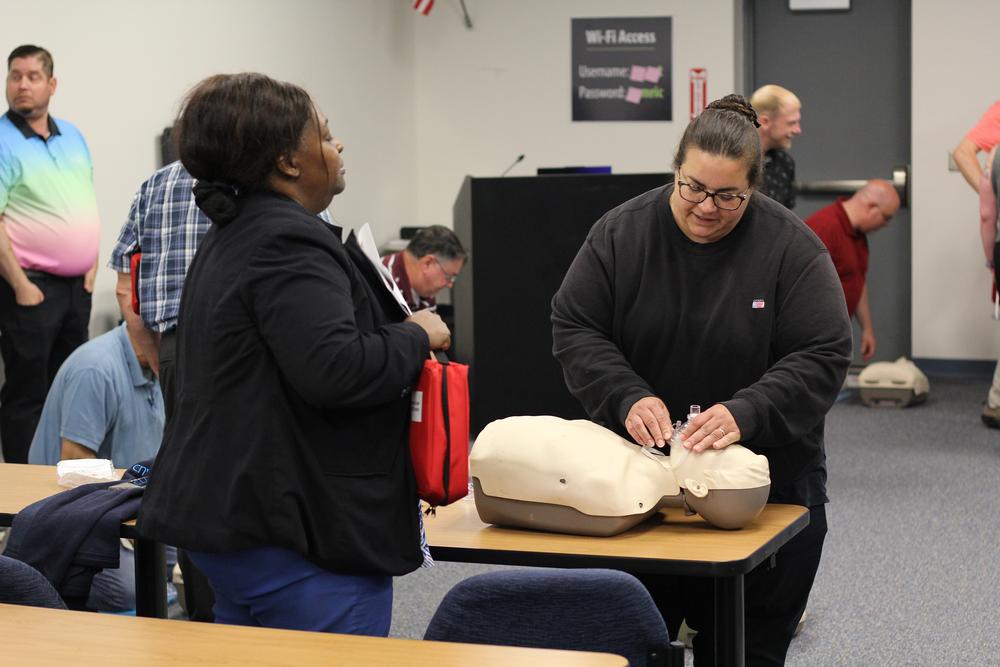
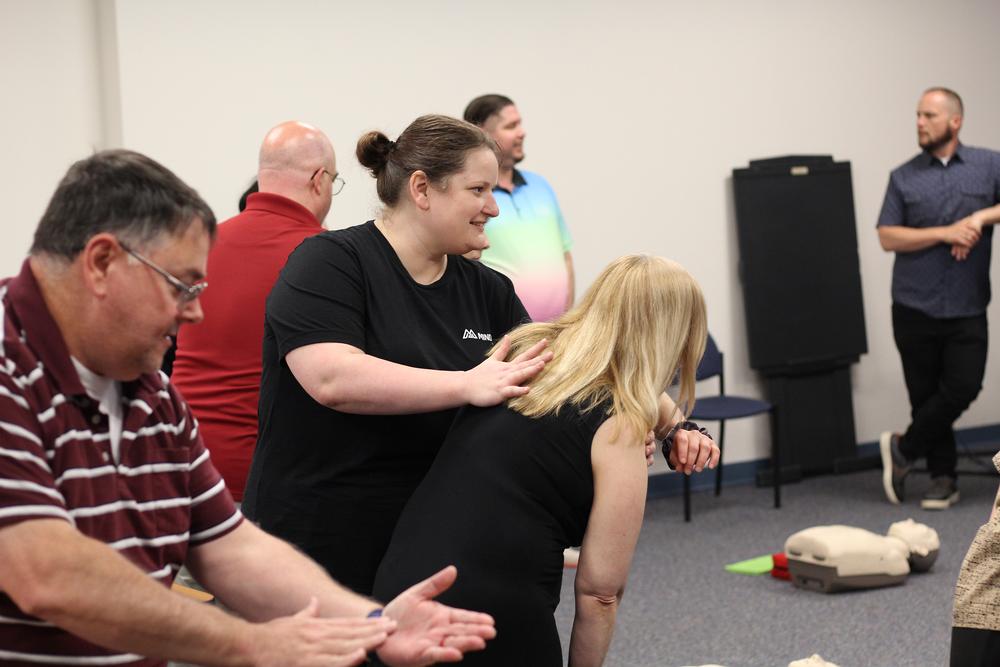
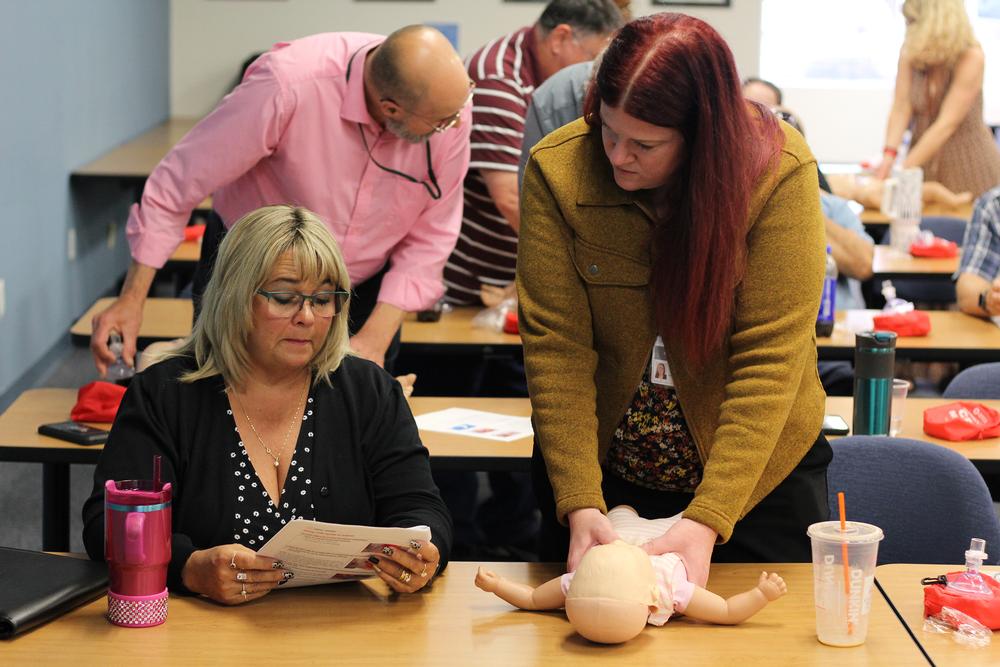
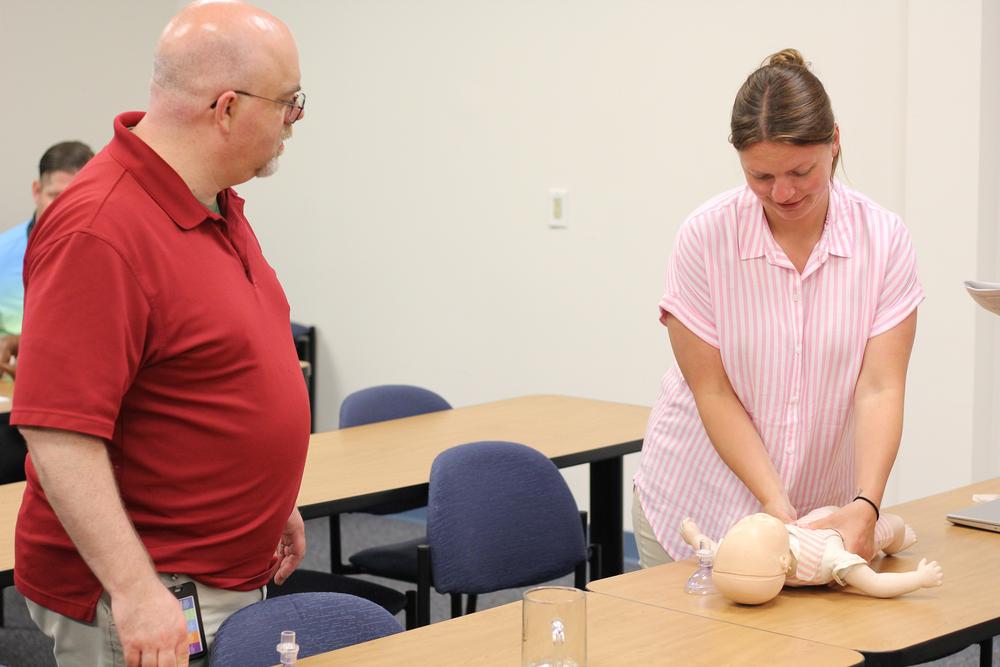
Participants got exactly what they were hoping for, as the Red Cross event provided participants with actual, hands-on training for how to prepare and react to a person who might enter cardiac arrest. From literal hands-on practice with the Heimlich maneuver, to the actual application of electrode pads and use of the defibrillator on practice mannequins, the training provided much more than mere words on a projector screen. The session also demonstrated how to assist children who might be choking, and even saw participants practice applying these techniques to infant-sized mannequins as well, covering the bases for effectively rendering assistance to people of any age who may be encountering a life-threatening situation.
When asked why she thought the response for this training was so enthusiastic, Assistant Director of Educational Information Services Alex Ackerman said it was born of the simple desire to help.
“Our goal was basically to help us help each other,” said Alex. “Members of the Wellness Committee acknowledged the presence of an AED machine in our lobby, but also expressed concern about our general lack of preparedness if anyone actually needed to use it in a medical emergency. They wanted to feel more prepared, and to know that if an emergency ever arose in the building, there would be a respectable number of people on hand who might be able to step up and help save a life.”
Those in attendance learned valuable skills for responding to a medical emergency, both here at the CNYRIC and out in the world. Many of us have likely heard stories of everyday people needing to respond with CPR in an emergency, or using an AED at sporting events, at the bus stop, at the playground, and various other scenarios. Many of us would want to help in these situations, but might be unsure of exactly how to respond. Having the confidence to know how to respond just might make a life-changing difference for somebody, somewhere, sometime.
The topic was broached when members of the (building-level) CNYRIC Wellness Committee specifically requested CPR/AED training. It was determined that this was an endeavor worth investing in given widespread buy-in from the committee members as a whole. When feelers were put out to gauge that interest, the committee hit the minimum number of people that would be required almost immediately. And so, the American Red Cross agreed to visit the CNYRIC campus to conduct CPR & AED training (which stand for “cardiopulmonary resuscitation” and “automated external defibrillator,” respectively).
Participants got exactly what they were hoping for, as the Red Cross event provided participants with actual, hands-on training for how to prepare and react to a person who might enter cardiac arrest. From literal hands-on practice with the Heimlich maneuver, to the actual application of electrode pads and use of the defibrillator on practice mannequins, the training provided much more than mere words on a projector screen. The session also demonstrated how to assist children who might be choking, and even saw participants practice applying these techniques to infant-sized mannequins as well, covering the bases for effectively rendering assistance to people of any age who may be encountering a life-threatening situation.
When asked why she thought the response for this training was so enthusiastic, Assistant Director of Educational Information Services Alex Ackerman said it was born of the simple desire to help.
“Our goal was basically to help us help each other,” said Alex. “Members of the Wellness Committee acknowledged the presence of an AED machine in our lobby, but also expressed concern about our general lack of preparedness if anyone actually needed to use it in a medical emergency. They wanted to feel more prepared, and to know that if an emergency ever arose in the building, there would be a respectable number of people on hand who might be able to step up and help save a life.”
Those in attendance learned valuable skills for responding to a medical emergency, both here at the CNYRIC and out in the world. Many of us have likely heard stories of everyday people needing to respond with CPR in an emergency, or using an AED at sporting events, at the bus stop, at the playground, and various other scenarios. Many of us would want to help in these situations, but might be unsure of exactly how to respond. Having the confidence to know how to respond just might make a life-changing difference for somebody, somewhere, sometime.